Friday, 27 September 2019

Visitors


Last week was a week of visitors.

On Monday friends from Warrnambool and Ballarat came to see Steve’s workplace and mine.  Martin and Anthony were Agriculture Victoria colleagues of Steve’s.  Martin and his wife Kaz are volunteering on the Bandari Project at Mto wa Mbu (Mosquito River) west of Arusha.  Anthony is on the board of a children’s home at Moshi, east of Arusha, and is also volunteering on an AVP assignment in Kenya.   Together Steve, Martin and Anthony can boast 100 years of doing no harm to agriculture in western Victoria!

Anthony, Martin and Steve

It was a quick visit - they had dallied at Echo which was fair enough as the men were all agriculturally inclined - but we walked quickly and I talked quickly so they were able to see all of the Olkokola Vocational Training Centre and hear all about it.  There was even time for questions. (Steve and I were able to do a reciprocal visit to the Bandari Project school on Tuesday on our way back from Lake Natron - it is an excellent project.)

On Wednesday we had a visit at OVTC from four young Dutch people (including an Australian/ Dutch woman originally from Perth). Two of the young men had visited Tanzania as secondary school students and the poverty they had seen had a lasting impact, particularly the lack of underwear possessed by boys.  They started the '4allfoundation' which aims to provide undies, currently just for boys but with the prospect of undies and washable/reusable menstrual pads for girls in the future.  They were impressed with OVTC and what it provides and I did a video interview - unexpected so unprepared! - which I’m debating whether I’d really want to see!  They also are keen for our tailoring students to start producing the menstrual pads, a sewing project that would be excellent from a social, ecological and economic point of view.


On Friday the children and staff from Step by Step Learning Centre, a school for mentally handicapped children, came to visit.  They were a lot of fun!  The children enjoyed seeing our students hard at work in their class rooms and also seeing our farm animals.  The accompanying adults were very impressed with the centre and the wonderful vegetable garden.  We have made Step by Step a present of a bull calf as they are establishing their own farm.  There is also the prospect of future links with our tailoring students making the fabric bags the Step by Step children require and our carpentry students making some furniture - shelves and cupboards.  We had a reciprocal visit to Step by Step Learning Centre today.  Our students and teachers had a very enjoyable time.  It is a very impressive school, a credit to the woman who started the centre when she realised there was no learning centre in Arusha where her mentally disabled daughter could gain skills and some independence.  A fellow AVP volunteer is working there on fund raising and I wish her all the success in the world - this centre (and many more like it) is sorely needed.


On Tuesday last week I was also a visitor.  I went out to see Holy Ghost Vocational Training Centre run by the Spiritans at Tengeru, just east of Arusha.  It is part of an impressive complex that includes a boys secondary school and a deaf education unit.  The Head Teacher showed me around and answered my many questions.  I am starting to get a better understanding of the vocational training sector and ways we might add value to what we do at OVTC.  I was also able to get a look at the official Vocational Education Training Authority (VETA) syllabuses for Carpentry and for Masonry - something which up to now had eluded me.  My next step is to get copies of the syllabuses for myself.  


My maths classes are continuing.  Each student has one hour a week in a streamed class that has a maximum of 12 learners so all can get individual attention.  The lowest ability groups have only 5 students.  We are concentrating on money and measurement.  For some students the aim is for them to be able to count and to recognise the currency of Tanzania; others are working on keeping simple financial records and doing tax calculations.  My challenge is to produce appropriate resources so that students will be able to be use them in a self-teaching situation after I leave.  Below is an example of the work left for our students by the local primary school teachers - with no feedback given!


Look at Steve’s blog for the story of our trip to Ngare Sero, Lake Natron and Engaruka with pictures.  Just a couple here as incentive to go and see more!


Love from Jenny


Sunday, 15 September 2019

A trip to town


The lives of students at the centre are quite sheltered and the hours of each day are fully occupied with all they have to do - lessons in their trade, lessons in maths and swahili by teachers from the local school and organised sport and exercises.  There are also lessons in health from the Medical Officer at the local dispensary clinic. The students also share responsibility for all the communal cooking and cleaning as well as their own personal washing.  They really don’t get out much!  So the excursion program is an important way of broadening their horizons. 

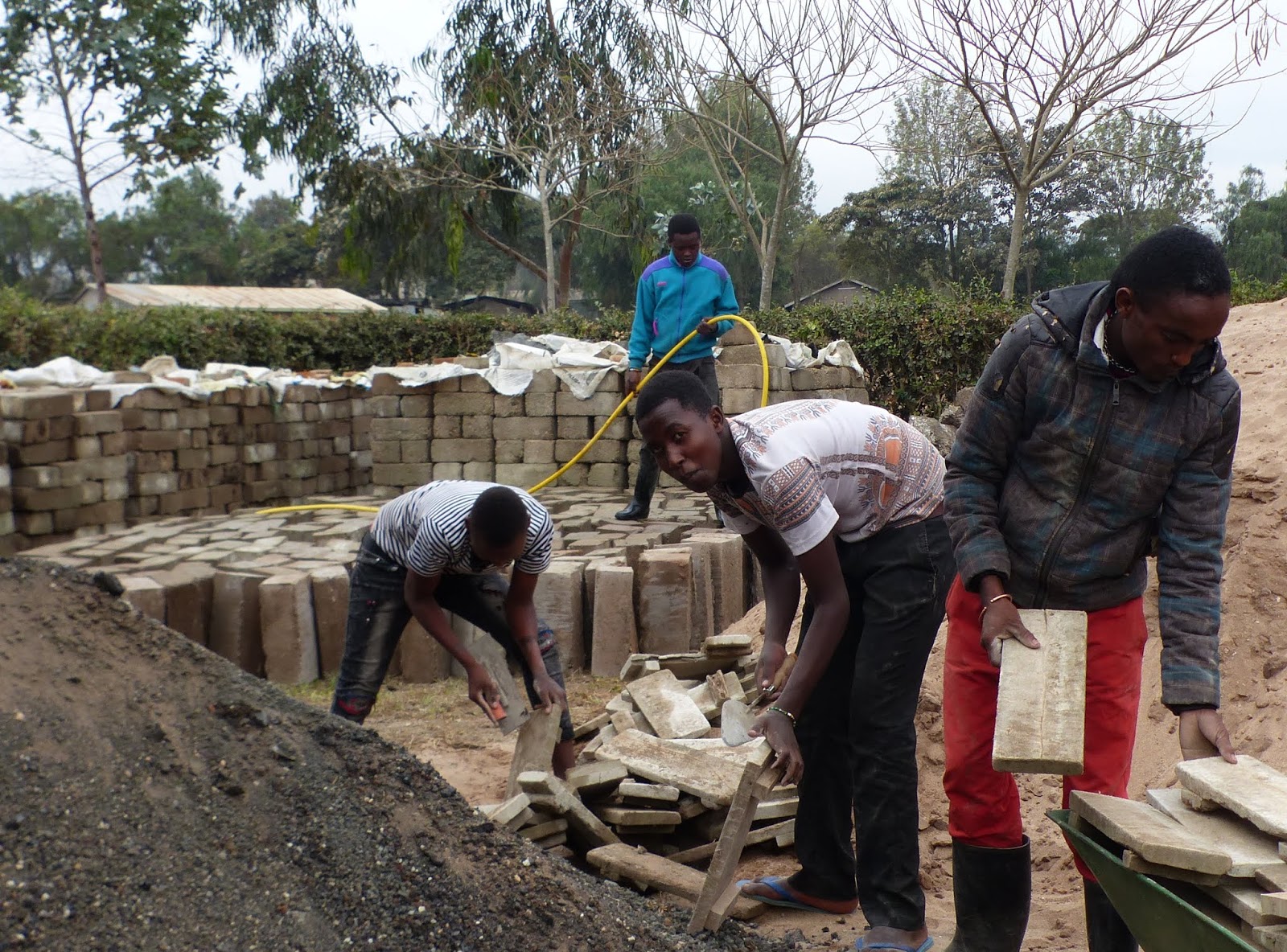
Day to day life - masonry students making blocks

Most of our students come from remote villages and so a trip into Arusha town is quite a novelty. Just like our Hamilton students on a trip to Melbourne, their eyes are out on stalks. 

Yesterday we went all went into central Arusha,  The 41 students and 4 of the staff were squashed into 2 daladalas (minibuses).  Two more teachers travelled in the land cruiser pickup with the wheelchairs in the back.

Some of our tailoring students

The aim of the day was to show students the sort of shops where they might buy the materials and equipment they would need for their small business.  When we arrived in town we divided into the different streams and each group went with their teacher to see shops for masons, carpenters, agrivets or tailors.  I went with the tailors to see sewing machine spare parts shops, notions shops and fabric shops. The tailoring group includes four students in wheelchairs (baiskeli in swahili), four using crutches and another 10 with mobility issues.  So getting around town with uneven footpaths and roadways and anarchic traffic around midday when a large slice of the business community were heading off to pray was somewhat problematic!  But, as always, optimism and perseverance triumphed and we managed it!  The students now have a better understanding of the business world that are training to enter.

And who was last back on the bus ( and almost got left behind ) ?  The Agrivet students of course!    

A  highlight for the students was having lunch at a cafe - roast meat with rice and a soda!  A meal they didn’t need to prepare and clean up after, plus soda - a rare treat! 

Having lunch in the cafe

An additional highlight for me was meeting Brian at Arusha’s central market. I had stopped short when I saw the Essendon Bombers t-shirt that he was wearing with pride - he clearly didn’t know about the season they’d just had.  In fact he didn’t know what an Essendon Bomber was.  He now knows they are a football team in Melbourne Australia (probably thinks soccer as Aussie Rules seemed like information overload under the circumstances) but not how poorly they played this year.  He was very happy to have his picture taken.


Brian, the happiest Bombers supporter in Tz!


More soon, love Jenny

Sunday, 1 September 2019

August has vanished!


It has been a busy month at OVTC with the beginning of the new term, excursions and visitors. 

I had four nights in the ‘back blocks’, up near the Kenyan border, staying at the Parish house at Loliondo.  I was with two colleagues on a recruiting mission. We again did the ‘4 hrs 13 min’ ( in reality 8 hour! ) route through Longido, then skirting Oldoinya Lengai and Lake Natron.  It’s hard yards in the middle seat of a hard sprung Toyota Landcruiser pickup.


Again, both coming and going, we picked up hitch hikers willing to ride in the back of the pick-up to save a dusty walk.  Again we bought rock salt at Ngare Sero near Lake Natron on the return journey.  This time there was no goat and no puncture, and a return to Arusha before dark.


The parish priest at Loliondo and the catechist at Digodigo had been busy out in their respective parishes finding suitable candidates.  They travelled with us giving directions to some very remote villages along marginal ‘roads’ to do the interviews.  Most of the people we met with did fit our criteria - over 15 and living with disability but with the capacity to look after themselves, help with communal cooking and cleaning and learn a trade.  These were given enrolment forms and information brochures. Also information and advice to help them prepare for living independently. Others who came to talk with us did not fit our criteria - too young or with disabilities too severe.  My colleagues are very good at directing these families to where help is available though for families from these remote areas to have the mother away with one child getting specialist treatment while the rest of the family remains at home can be problematic.  It is a testament to the determination of mothers that many of these children survive at all.  We saw several cases of severe cerebral palsy with intellectual as well as physical disability and it must have been down to the fierceness of the mother’s will, still carrying a grown child, who cannot walk, on her back, that these children remain healthy, well fed and cared for.  

In another case a woman in her early 30s, married with two young girls, and paralysed from the waist down was being cared for by her family.  I think it was her sister-in-law who carried her and propped her up to sit so she could help with the cooking tasks.  We were able to take her into Wasso, the largest town in the area, where the hospital provided her with a wheelchair.  She has been given suggestions for exercises to increase her upper body strength.  With her family’s support to look after her children we hope to have her enrolled in next year’s cohort to learn tailoring.


On the Saturday we had a day east of Digodigo near Jema, a small and remote town.  The parish priest insisted we take a ‘picnic’ as he knew there would be no café or hotel to buy food.  We were up early putting together sandwiches of his design - peanut butter, pork, tomato, cucumber and honey - which were quite tasty!  We also had fruit, biscuits and water.  We met with people afflicted with ‘club foot’ (a congenital condition where the ankle is malformed and so walking is difficult), scoliosis (malformation of the spine) and other physical disabilities resulting from accidents but also several children with Down’s Syndrome.  People with Down’s are able to be contributing members of their society as they can walk and there are many simple tasks they can perform.

I have such admiration for everyone involved - my colleagues, the local communities who help us find candidates and the families of the people with disability who care for them, protect them and advocate for them.


If you have Google Earth you can look for the villages we visited


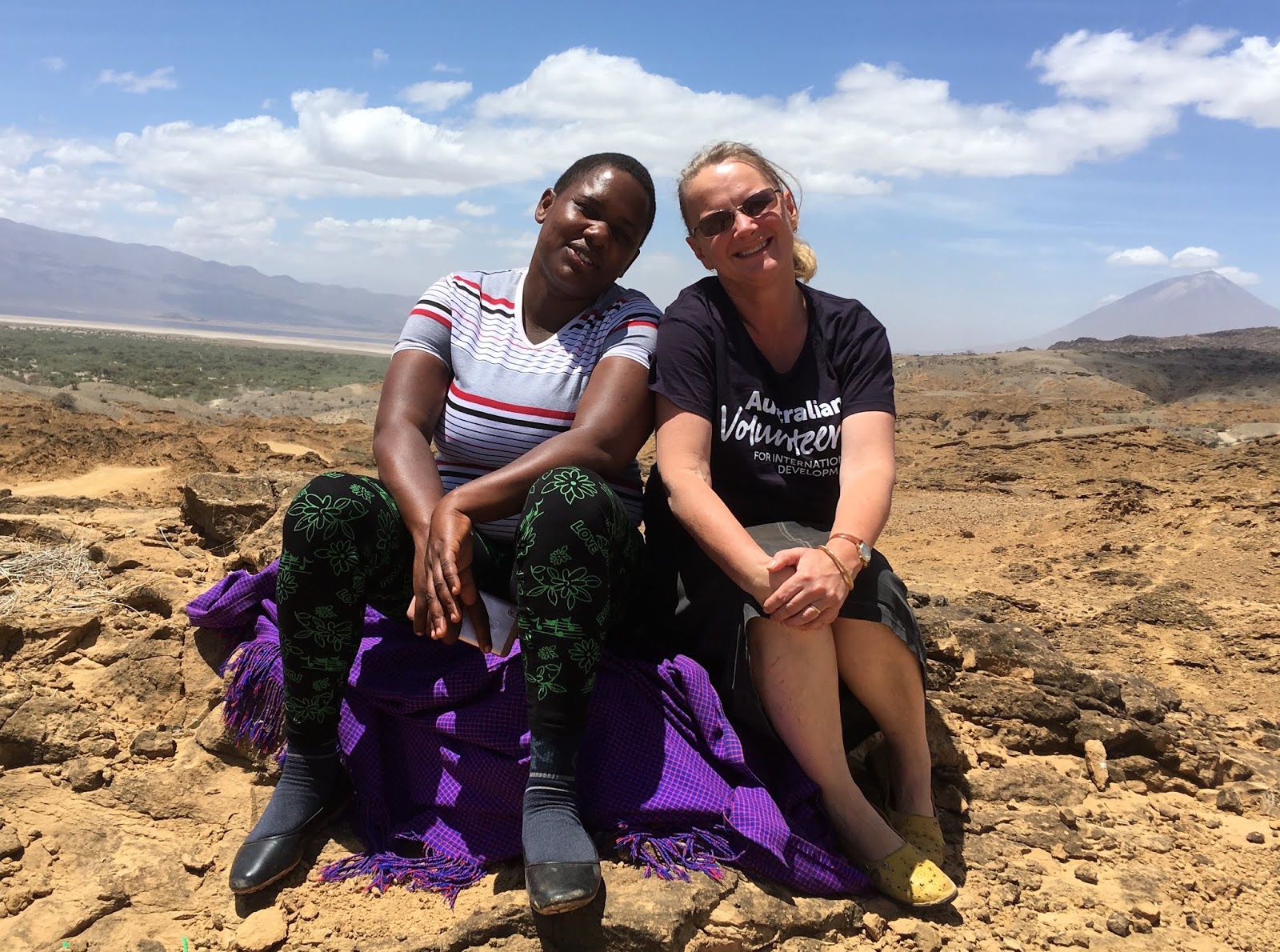
For my 60th birthday 2 weeks ago we had a weekend at Lake Manyara.  You can look at Steve’s blog for pictures of birds and mammals, but here is a rare one of the two of us.


More soon, love Jenny

Sunday, 11 August 2019

Another month on


It has been a day of tragedies.  First I listened to Melbourne playing Collingwood.  Then the Essendon versus Bulldogs game put my misery into perspective.  And now, we’re just reading about a true tragedy.  More than sixty Tanzanians have been killed when an overturned petrol tanker caught fire.  Most of the victims will be pikipiki (motorbike taxi) riders trying to catch the leaking petrol to use themselves.  Pikipiki riders make about 10,000 Tanzanian shillings a week - around A$6 - so free petrol would be a great attraction.  Unfortunately one of them forgot to put out his cigarette first. (I wonder which story will get the most time on tomorrow morning's news bulletin?

Poverty leads to people taking risks and lack of education compounds the problem.  Then the fatalism that leads people to say ‘God’s Will’ means there is no change as the true cause does not get addressed.  Having daily experience of Tanzania’s poor roads, unroadworthy vehicles and appalling drivers which traffic police seem unwilling or unable to challenge I have no doubt that today’s tragedy is one that will surely be repeated.

If you are a regular reader you’ll have noticed little activity (actually none!) on the blog recently.  That doesn’t mean I haven’t been busy - I truly have! - but I’m going through a ‘treading water’ phase waiting for feedback to see what direction to go next.  So nothing interesting to report. I could give you a run down on Tanzania’s tax system and send you my outline of a 10 lesson course on Running a Small Business - let me know if you’re having trouble sleeping.

In this job you hope what you do will be sustainable.  There’s no point going off on your own inventing wonderful things if the ‘yes, that’s good’ is an African ‘yes’ that means ‘no, not really useful at all’.  So I keep planting seeds and waiting to see what is watered, or maybe planting bombs and waiting to see what explodes!  My Running a Small Business lesson notes have been sprinkled around and I’m awaiting interest - someone who will say “I’d like to teach that!” and mean it.

I did have an interesting experience during the mid-year break going to the Kilimanjaro Christian Medical Centre (KCMC), a huge teaching hospital in Moshi, with two of our students who are being fitted for prosthetic legs.  KCMC trains doctors, nurses and other medical professionals.  It has one of the largest and most highly regarded prosthetic limb laboratories and training facilities in Africa.  Our boys were live models for 5 students who all made moulds of their stumps using gauze and plaster of Paris. They had to go back the next day when the moulds had hardened to see which was most comfortable - direct assessment of the students’ work! - and now are each waiting for their new leg to be finished.  Then they’ll be fitted, given instructions on their use and care, and be trained in therapy exercises to get them walking again.  Very exciting.  (Harking back to paragraph 1, both young men have had an above-the-knee amputation as the result of motor vehicle accidents!)

Students admiring the cattle

In the vegie plot
The students are back now from their month-long mid-year break. The beginning of term has been messy with a whole-day excursion to Nane Nane, the agricultural show, on Wednesday then the Nane Nane public holiday on Thursday.  Next week we’ll have the Islamic celebration Eid al Hajj, a public holiday (probably Monday, but only announced the night before, argh!!) and a visit from Femme International to talk to the girls and women about menstrual health which could also be a day long event.  My maths classes will start again next week too which I’m looking forward to.  I need to trial some of my new maths worksheets to see what needs tweaking.

Over the next few weeks we should also be visiting a lot of the past students to see how they are managing - all students are followed up for at least 3 years and I’ll be interested to hear what they have to say about what else we should add to the 18 month program. 


I'm adding these photo of the Leopard Tortoise we saw at Kili Golf Estate on Thursday - Steve and i had a birding excursion there on the Nane Nane Day public holiday with four young Tanzanian birdwatchers from the group Birding for Life.


If you have the opportunity to visit the national parks why wouldn’t you?  We’re lucky enough to have time and resources so we had two nights in Tarangire NP.

From our side of Arusha it’s just a 2 hour drive to the main gate of Tarangire NP but we went down the luxury (expensive!) route of two nights full board at the Tarangire Safari Lodge which is inside the park. Look at Steve’s blog for lovely pictures.  We’ll have a weekend at Lake Manyara NP next weekend to celebrate my birthday so watch for more pics from there in a week’s time.


More soon, love Jenny


Sunday, 7 July 2019

Three months!


I’m sitting on the front porch thinking what has happened in the last 2 weeks that I can write about.  It all seems fairly mundane, but for you, family and friends in Australia, I hope it will seem interesting.

The first term for the current crop of students finished on Friday and they all return to their villages for a month.  I imagine it will be quite  a shock for them all.  They’ve had 6 months to get used to electricity, running water and sewered toilets.  They certainly won’t have that at home!  And they’ll miss the abundant food available here.

The students will also miss the medical care that comes with boarding at Olkokola Catholic Mission.  I’ve had quite a few trips with students to the local Selian Lutheran Hospital and also to the bigger Arusha Lutheran Medical Centre and NSK Private Hospital in town for more specialist tests.  Although everyone speaks English I find the system bewildering - noisy, crowded and chaotic - and have been glad to usually have the tailoring assistant teacher with me so I can just be the driver!  The waiting room is always good for ‘people watching’ - I love the traditional Maasai robes and beaded jewellery - and I don’t feel guilty about having a good look as you can be sure everyone is having a good look at me!

With the students on holidays, most of the staff will also be away at their home villages too.  I hope to do some work with those who are staying in the staff housing over the break on computer use and also get more idea of what maths skills they want students to master for my “Karatasi ya Hisabati” maths program.  Devising the maths worksheets is keeping me entertained - I have over 50 now.  I’m getting a bit more adventurous.  And adept at ‘borrowing’ images from the internet.  As you can see, I’m still more task oriented than people oriented.


Mostly money and measurement being practised.
Beginners - learning to add single digits
I have enjoyed the small maths classes I have been running.  I always say “no, I’m not going to Tanzania to teach students” but it seems this time I was wrong.  The small classes are divided by ability and I usually have groups of 3 - 5 working on the same task.  We have lots of learning aids - bottle caps, number cards and miniature Tz currency - and the students are keen and really enjoy the chance to improve their skills.  My swahili is improving as I struggle to give students practical examples of where the particular arithmetic would be used.  I have written down my script for “You buy … that costs … shillings.  You give the shopkeeper … shillings.  How much change will you get?” 

 On the home front we are no longer being bothered by the rat.  We suspect there is one that comes and inspects our kitchen after dark for food left out but we are very careful to put everything in sealed containers so his visits are fruitless and will hopefully stop.  We have the shopping sorted and can find most things we need locally.  It’s only meat and fish we need to go to Shoppers in town or Sable Square to buy and once a fortnight is manageable with the largish freezer in our fridge.  Steve’s bread making is progressing well.  We had a wholemeal, oatmeal and cracked wheat panini with our dinner last night which was very nice.

We can buy Vegemite (sometimes} but at an outrageous price!


Home is a peaceful and private haven from the chaos of Arusha.  We are always glad to come in the gate at the end of the day.  The trees mute the ‘shouty men’ from the local pentecostal chapel and the mosque - we hear them if we’re awake but they don’t wake us up or keep us awake.  Being a close neighbour to a church or mosque would be a nightmare!  Religion is sacrosanct here so it would do you no good to complain.  Tz is a quirky country - public holidays declared the night before; women in trousers refused service in public offices (and men in shorts!).

The view of Tengeru from the mountain.

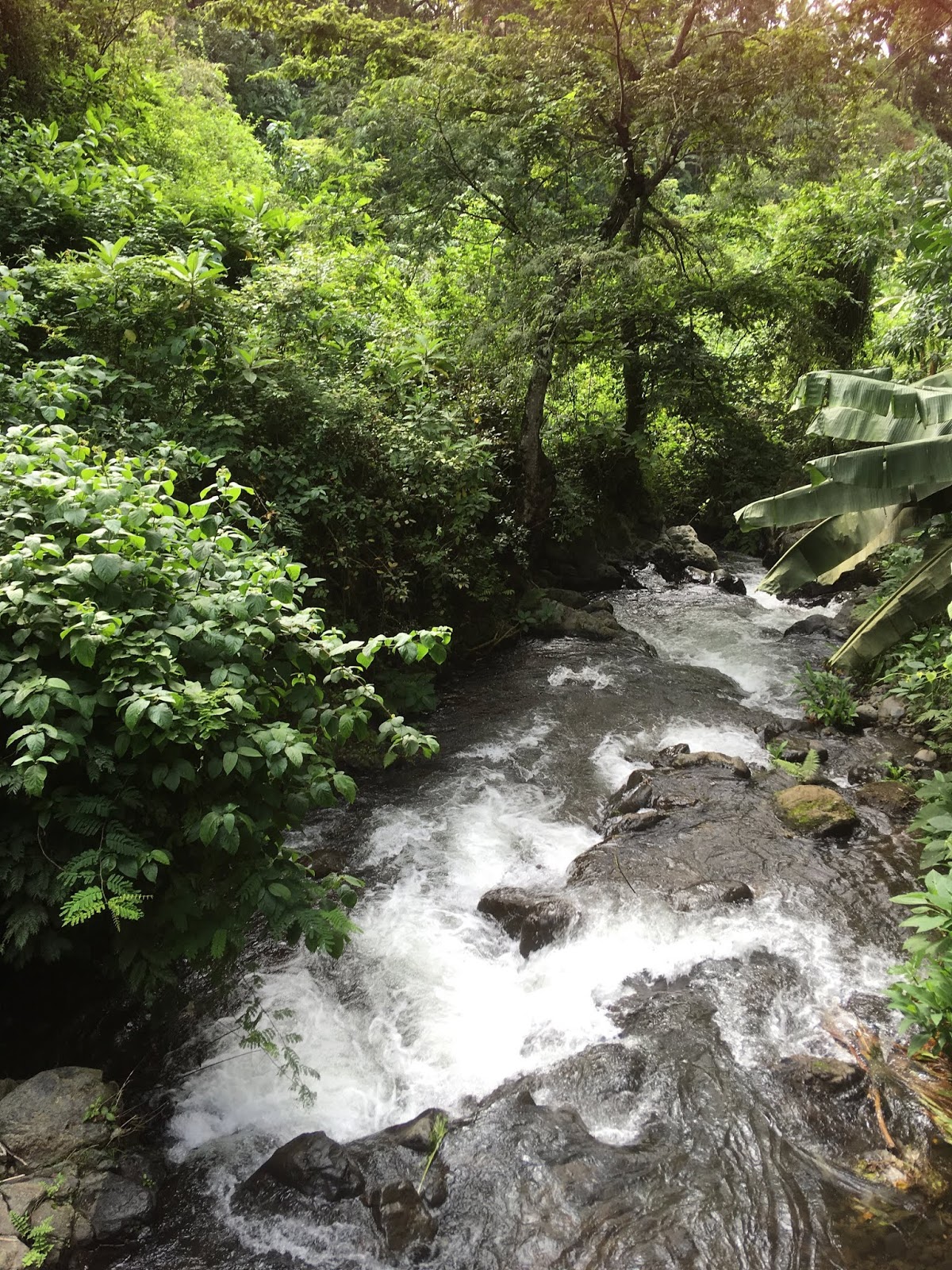
One of the streams flowing down Mt Meru.


Getting exercise is an issue - I’ve lost all the aerobic fitness I’d gained swimming and walking at home in the months before we left.  A fortnight ago we did the Twende Hike - 5 hours of steep climbs and steep descents - which I’ve decided isn’t for me.  Last weekend we did a far less strenuous bird walk at Oldoinya Sambu with a group of locals.  I quite enjoyed that.  This weekend we hope to do the walk around Lake Duluthi again.  It shouldn’t be as muddy as it was on our list trip there - luckily we were in the Suzuki Jimny or we would have become hopelessly bogged.

Market day at Oldoinya Sambu

No longer an Acacia sp. (but don't tell the South Africans)

Three months also marks the expiry of our tourist visas.  I now have a stamp in my passport from Immigration saying my Residence Permit Class C - missionary volunteer - is ‘Under Process’ which gives me permission to be here until the ‘process’ is finished!  Steve was granted a ‘Work Permit’ on Friday, hopefully the Residence Permit will follow soon.  We are hoping these documents will give us access to cheaper entry to the national parks and ‘residents rates’ at the lodges.  We are planning a weekend at Tarangire NP next weekend - the subject of my next blog post I expect!


More soon, love Jenny

Saturday, 22 June 2019

Resilience is tested


On Tuesday and Wednesday this week I have been on a field trip to visit former students to see how they are fitting back into their communities and to assess what more our program can do to help our students become contributors to their communities.

If you are a Facebook friend you will have seen the romantic side - dramatic scenery and exotic animals - so now you can read about the less than glamorous reality. 

There are several ways to get to Malambo.  The route that goes through the Ngorongoro Conservation Area is faster and more comfortable as more of the trip is on tarmac.  But it costs a non-resident like me (still no work permit or  residence visa!) about US$50 each way so we went the slower bumpier route skirting Oldoinya Lengai and Lake Natron. In one hour the step counter on my phone recorded over 3000 ‘steps’ - that’s 3000 jolts where my leg is being battered by the gear stick and my knee by the dashboard.  In the middle seat of the Land Cruiser there is no head rest so my neck next day felt like I’d gone 10 rounds in the Dodgems.  Still, the views were spectacular!

We were able to help a motorbike taxi rider who was stranded with his passengers - mother and toddler - and a punctured tyre.  The bike, rider and mother went in the back of the truck and the toddler was on my colleagues knee in the front.  Toddler was less  than impressed at being in such close proximity to a mzungu but was bribed into silence with biscuits. We took them about a half hour’s drive into the next village where tyres could be mended.

This was the third lot of hitchhikers we’d given a lift to - the first group were happy in the back of the truck on the highway at 100km/hr.  The second group were Maasai warriors in full regalia heading somewhere special.  The women folk were also heading somewhere special.

My colleague is convinced by the notion of karma.  Because we helped someone in need on the road, we also were helped when we were stranded with a punctured tyre and a flat spare in the middle of nowhere on the way home on Wednesday.  A truck came past not long after we’d discovered our predicament and took him and the spare into the closest village with 12-ply tyre mending capability - a predictable 1/2 hour away - and so we were only delayed by about 2 hours.  In that two hours we only saw a safari vehicle - heading in the wrong direction from our point of view - and three motor bikes.
Our ‘hitchhiker’ on the return journey was  less than impressed with the situation.  We’d picked him up at Malambo about 8 o’clock so he was already 8 hours into a very bumpy journey with prolonged stops tied by the neck in the back of the truck.  We broke some twigs off an acacia bush to give him something to eat while we were stranded but it was to be another 6 hours before he arrived at his new home.

You can see in the picture that he is surrounded by bulging bags.  These are full of rock salt, rock harvested by women near to Lake Natron, the sale of which gives them an income.  When we stopped at the village near the lake we were mobbed and my colleague spent nearly an hour negotiating with all the women to get the best price but to spread the wealth around.  I stayed in the cab of the truck and was entertained by local children asking me questions and telling me fibs.  Who knows what the goat thought as the bags piled up and hemmed him in.  The rock salt will be used as a feed supplement for the cows, sheep and goats at Olkokola Mission and this truck load should last about 3 months. 

As I said, the goat had already had several extended stops.  The purpose of the trip was to visit past students and to locate possible candidates for the next program starting in August next year. We spent several hours in Digidigo first with the assistant parish priest who belatedly thought we should also meet with the parish priest who, after the chat, thought us worthy of being offered sodas which took quite a while to procure by which point I was not feeling as ‘people oriented’ as I should have been and much more fixated on the task of getting back to Arusha.

We had also stopped to see several former students, graduates of the program, to see how they were faring.  All the ‘chat’ was in fairly rapid swahili so I only have a vague idea what was said.  I will be interested to read the questionnaire forms that were completed and find a way to analyse the information garnered.

I was able to see that the students we have come from some quite isolated and remote bomas and villages and are living in quite dire circumstances, particularly those near Malambo were the long rains have failed and food will be scarce later in the year.  The landscape around these parts is dry and dusty and even 4WDs risk getting bogged in the sand.  Flies seek out moisture in the eyes, mouth and nose of people and their farm animals and are a nuisance; the mosquitoes are more of a problem with malaria being endemic.  I have been up close to the reality of other  people’s lives in Africa often but it always makes an impression and reminds me how privileged I am.

This picture is at Kasangiro near Digodigo.  The rains have been kinder here and some crops will be harvested.

My colleagues on this trip   were determined that no afflicted person should be unaware of help available and any group, no matter how big or small, was given information about the programs offered by us, by The Plaster House and by Help for the Massai.  It was a very worthwhile trip and I’m so very glad I was included.

The amazing scenery and the gazelles, giraffes and zebras and the ostriches and all the smaller birds were just an added bonus!   


More soon, love Jenny


Sunday, 9 June 2019

A very African week


We must be in Africa - one of the week’s highlights was seeing the back half of a very large elephant as he stepped off the road and into the forest in front of us.  We spend Wednesday in Arusha National Park as no work on a public holiday.  The week just gone included the celebration of Eid el Fitr - a two day (or possibly two half days) holiday that isn’t declared until the evening before.  This year it could have been Tuesday and Wednesday, or Wednesday and Thursday (or even Thursday and Friday but that was only a slim chance that no-one took seriously).  It is a public holiday that tells me I’m in Africa with equal parts amusement and exasperation!


Sewing group - making slings to suspend babies in when they are being weighed at the Flying Medical Service  Clinics.


I’ve been working on getting a speaker from Femme International to come and talk to the girls about sexual, menstrual and reproductive health for over a month and late Friday last week FI finally sent an invoice and confirmed a speaker for Thursday June 6 if we had paid and if it wasn’t a holiday for Eid.  The problem was that I couldn’t get to the bank to pay until Tuesday and if that was a holiday then the speaker wouldn’t be able to come on Thursday even though it wasn’t a holiday because we wouldn’t have paid and the materials for the workshop couldn’t be prepared until I had.  If Tuesday wasn’t the holiday then I could pay but FI couldn’t come because Thursday would be a holiday!  What a way to run a country!  Africa! (I did make the payment on Tuesday and have had a speaker confirmed for Thursday next week!)

Wednesday we had a lovely day at Arusha NP.  Lots of birds, mammals and reptiles and a glimpse of the snowy peaks of Mt Kilimanjaro.  Look at Steve’s Blog for lovely pictures.

Yesterday I had three jobs to do - 1. get money from the ATM, 2. transfer it into my M-Pesa account on my phone to pay for electricity and 3. get some laminating done for Monday’s maths lessons.  I walked down to the shops with high hopes.  The CRDB ATM was not working, neither was the NBC ATM. Oh well, hamna shida, I gave all the 10,000/= notes I had to Glory in the M-pesa office so at least we would be able to pay the electricity.  Luckily (!) the electricity was off for about 12 hours on Wednesday so we hadn’t used up all of our last top-up.  I tried the first laminating shop - they don’t actually do laminating there, they send it away to be done and you pick it up later so no use to me.  The next laminating shop - one I’ve used before - was closed.  The third and final one was open but had run out of pouches!  So I walked home with one job half done.  Not a great result even by  Tanzanian standards.  Today I took the pages needing laminating and some of my own laminating pouches down to the third shop and did the job using his machine.  I gave him 1500/= for the electricity used! I need a visitor from Aus to bring me my laminator and a case full of pouches!

Today we also went to Shanga - one of my favourite places.  We took our collection of empty glass jars and bottles for recycling.  Shanga has workshops for glass blowing, weaving, tailoring and jewellery making, mostly staffed by people living with disability.  I bought another jug - I just can’t resist.  And I think it a social enterprise eminently deserving of support.  We are taking the students from Olkokola there next Tuesday on an excursion.


We still have no work permit or residents visa.  I have a receipt that says I’ve paid the visa fee which the Archdiocese immigration officer says I can flash if the Immigration Police ‘disturb’ me.  A trip to Uganda could be in the offing!


More from Tz soon, love from Jenny