|
| Jean Robertson |
Tomorrow is the anniversary of my mother’s death. Mum died on her way to visit me in Bukoba last year. Her African Adventure was cut short in Pretoria and she didn’t get to meet the people with whom I worked and see the schools and the children she had heard so much about.
Mum’s life and attitudes have always influenced me - she was there at the beginning of my faith journey and her sense of social justice, present strongly also in her mother, has continued in me.
I know she was very proud of me and of Steve for our decision to volunteer in Tanzania and was highly interested in the work I was doing (and in Steve’s birding activities!).
This blog post is dedicated to her memory as “Wanting Africa” was for her.
Day 1 Monday April 2nd
The last thing I did at home before we left for Ballarat at 1 pm was to pack the cheese and chocolate for Stephanie, my friend with whom I was staying Bukoba. I figured with the insulation of clothes around it the cheese would survive a few days unrefrigerated and I knew how desperate for cheese a person can become in Bukoba. The shuttle bus to the airport from Ballarat station took off on time with many excited passengers. My flight however left Melbourne late, which had consequences for the rest of the trip to Bukoba. I didn’t think then how serious that might be.
Day 2 Tuesday April 3rd
The Melbourne flight arrived in Doha at 6.30 am just as my plane would be flying out to Dar es Salaam. I went straight to the Qatar Airways transfer desk to see what could be done. After a wait in the queue (many were affected by the late flight) and a 2 hour wait that included breakfast courtesy of Doha International Airport I was given a boarding pass for a flight to Nairobi Kenya and a printed form hand written with instructions that I was to be given a seat on a Precision Air direct flight Nairobi to Mwanza. The Nairobi flight wasn’t to leave until 1.30 the next morning so I was also given vouchers for a hotel room in Doha for the day and for lunch and dinner at the hotel. A hired car would take me there and back. But that also meant having to clear immigration into Qatar so more queuing.
At the hotel I had lunch – 5 star cuisine and very fancy – before spending the afternoon walking the broad thoroughfares of the tourist and diplomatic quarter.
Doha is not a place where many walk so I had the footpaths to myself.
Doha is a work in progress. Interesting buildings are being constructed everywhere.
It was hot work too – if I’d had my luggage I could have had a swim in the roof top pool. Interestingly it didn’t occur to me then to wonder where my luggage would be!
After another haute cuisine dinner I had a doze in my room and then left for the airport in the hired car at 11 pm.
Day 3 Wednesday April 4th
The flight from Doha to Nairobi left late and I tried to sleep all the way. I panicked slightly when another of the passengers showed me his boarding pass and it was to Dar es Salaam but I remembered that this flight did go on after its stop in Nairobi. The plane arrived late in Nairobi and as soon as I disembarked I sprinted for the transfer desk. While queuing I heard the call for passengers on Precision Air to Mwanza leaving from Gate 3. I raced down there and showed the young official there my paper and passport. He told me I should go to gate 4. At Gate 4 a very polite lady looked at the paper work and said I needed Gate 11. I ran to Gate 11 – it was an ‘arrivals’ gate, not a ‘departures’ gate but not to worry, there was an inquiries desk nearby. It was unmanned and remained unmanned for the impatient 5 minutes I waited there. I was starting to get agitated, as I knew my flight would be boarding so I tried the transfer desk again. The woman there studied my paper work and sadly said I would be too late. I tried impassioned but assertive begging. She consulted someone else who said I should go back to Gate 3 and beg there! I arrived back at gate 3 as the young man I had first spoken to was padlocking the door. I pleaded with him and showed him the papers again. “No one tells me anything” he muttered and said “Follow me”. We went to Gate 4 and he asked the woman there what was to be done. This time she suggested I go down the corridor next to Gate 3 and see if I could talk my way on that way. I hoped this wasn’t just another “not my problem but this will get you out of my face” tactic. I raced down the steps and around several corners before arriving at a check-in desk where someone finally understood the meaning of the paper, wrote me out a boarding pass and sent me on to the bus. After a frantic 20 minutes in Nairobi I could finally relax as I stood on the bus waiting for half an hour before being delivered to the plane.
The flight Nairobi to Mwanza is quite short – just over an hour – and arriving in Mwanza started to feel like coming home. Here I knew what was what!
This was the point where I started to think about my luggage. It certainly hadn’t arrived in Mwanza with me. I went to the office and explained. I was asked for my baggage check. I couldn’t find it. Heads all around the office were sadly shaken. I didn’t know if my bag was in Melbourne, Doha, Nairobi or Dar es Salaam. I described it for the official form, gave them my friend Stephanie’s phone number (my VodaTz sim wouldn’t work) and bought an air ticket to Bukoba. Janet, my new best friend in the Precision Air office who had promised to do her level best to find my bag despite my obvious carelessness about its safety, said if it was found Precision would fly it to Bukoba. I hoped it was found before the cheese in it over ripened. It could be exploded as a possible terrorist plot!
Next step was to buy a sim card for my phone. I was right on top of the Swahili for that and for buying the vouchers for it and was soon able to assure all the people who cared that I was safely in Mwanza though sans luggages and would be in Bukoba that very afternoon. It was lucky I had brought the shillings remaining from when we’d lived in Tz, as the ATM at Mwanza Airport was ‘temporarily out of service’.
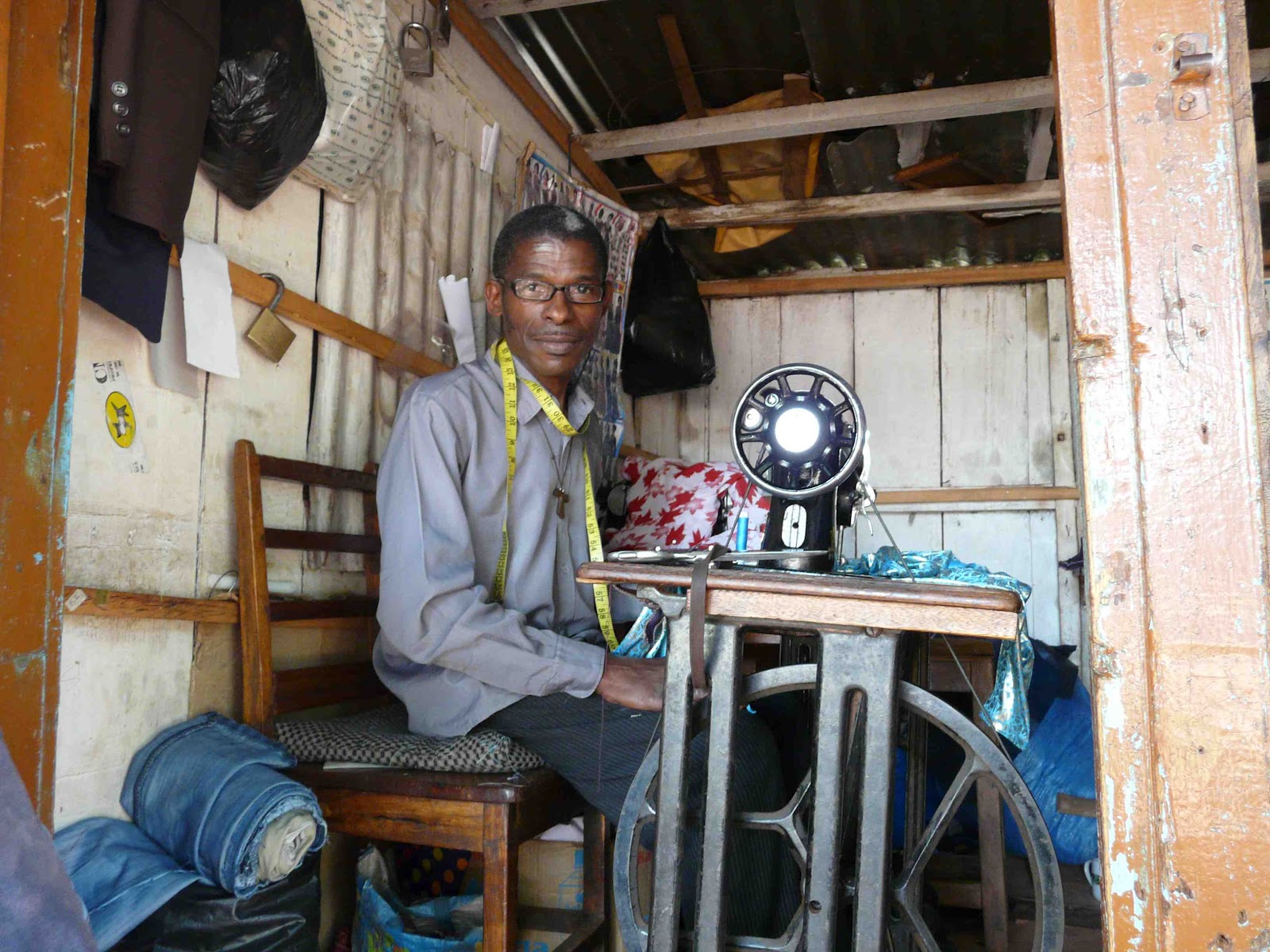
The flight to Bukoba left on time and landed in beautiful sunshine. I texted Steph that I had arrived and told her I would go to the bank to get shillings so I could buy emergency supplies then meet her at 4 pm at the New Rose Café. I had no luggage to worry about so walked into town and met slight problem number 1. Neither ATM at the NBC would accept my visa card. Neither would the ATM at the CRDB! Luckily Mr Fido Dido at the grocers remembered me and was willing to take US dollars for toothpaste, toothbrush and deodorant. He also exchanged some dollars for shillings so I would have a little cash. I bought some fabric at the market and organised my tailor Mr Audax to make me a dress, then bought a t-shirt to use as a nightdress (second-hand and from a 2003 Young Baptists convention but had JC on the front which was nice and something about Jesus the superhero on the back) and a t-shirt (new) that almost went with my skirt. The best thing about Tanzania is that it doesn’t matter that the electric blue t-shirt looked odd by western standards – no-one cares what you are wearing provided your knees are covered.

I met up with Steph at the New Rose and called my faithful taxi driver Hosea who as always cut to the chase with “where” and arrived promptly in a new taxi – lovely burgundy colour with tinted windows but same cracked windscreen.
The drive up the hill to Kibeta was just as always – dodging pedestrians, cyclists and piki-pikis. KEMPS (Kibeta English Medium Primary School) where I am staying is in the same road as our house when we lived here. It was all so familiar and again like coming home!
After a wash, a change of t-shirt and a rest I recharged the power on my telephone with almost the last of my computer's dwindling reserves. This was going to be shida kubwa (big problem) if my luggage with the computer power cable didn’t arrive. Then we headed for my old favourite, the Kolping, for dinner.
We walked, along the same track I’ve taken a hundred times! We stopped to tell another friend, Bairu (my replacement at BDC), where we were going so he could join us. We stopped at the shop next to my old house where the children remembered me instantly but were astounded to see me, and continued on to the Kolping where pizza was off – no cheese to be had currently in Bukoba – but the fish fingers were as fine as ever.
By this point I was exhausted – over 50 hours without a proper sleep – and grateful to fall into bed at Steph’s protected by JC and a mosquito net for a blissful 8 hours horizontal.
A small ps. The cheese situation is so bad that ex-pats have started making their own. This was Steph’s attempt – a new take on blue cheese? Note to self: Use plain muslin when separating the curds and whey.
Day 4 Thursday April 5th
I woke to the dawn chorus – the sounds familiar but the names didn’t come without Steve’s prompting. At 7 my phone rang. It was my new very, very best friend Janet to say my luggage had arrived in Mwanza and would be sent on the next flight to Bukoba. Being the rainy season, with unpredictable severe electrical storms, though it was scheduled to arrive at 11.15 am, it could be any time.
At 11.00 I rang Hosea to take me to the airport. When we arrived there at about 11.30 the plane had not come and was tentatively expected at 2.30 pm. Hosea drove me back in to town and I caught up on some of my unfinished tasks. The ATM at the bank gave me shillings (hooray!), I waded through the mud to buy carrots at the market (ruining at that point my only shoes) and visited the internet café to catch up on news.
I visited my friend Ebrahim Sokwala and talked prices of books and Reading Program sets that we would like to supply to schools if next week’s review visits are successful. He was very helpful and enthusiastic as always.
I had chai and andazi at the New Rose Café. I asked for chai ya rangi – tea without milk – and it arrived heavily sugared. I apologised to the owner for being a nuisance but could I have tea without sugar thank you. The next cup that was delivered was just hot water and sugar! I had to drink it but it was a struggle.
To lower my blood sugar levels I decided to walk to the airport, again wading through the mud. I arrived at 2 pm and there were folk everywhere waiting either to welcome arrivals or to depart on the plane when it left. At 2.30 the departees were called in (this was hopeful I thought) but it wasn’t until 4 the plane finally arrived. My bag was there, undamaged and seemingly unopened. There was no cheesy smell detectable. It was handed over with no paperwork needed and suddenly all was right with the world!
My bag has wheels so, as Hosea was busy, I started to walk back to town. I regretted this decision fairly quickly but, determined (stubborn?) person that I am, I carried on to the corner with the main road. There the driver from BDC, Mr Kitunze, spotted me and gave me a lift in the council’s new dual cab 4WD ute!
Later, back up the hill at Steph’s we opened the bag. The Easter eggs looked fine. The blocks of Swiss chocolate and the bag of snickers were fine (we checked by eating a snickers each after dinner) but the cheese – Jarlsberg and Tasmanian Ashgrove cheddar looked a little runny around the edges. The cheese has been refrigerated and we’ll know when we’re game enough to open the plastic wrap whether it is edible.
All the other goodies and gifts were fine, my computer was happily recharging and Day 4 was judged a success
Day 5 Friday April 6th
The rainy season has fired up again to coincide with my visit – it was fine and sunny last week! I waited until the rain stopped this morning before heading down the track on my old walk to work.
I was interested to see the progress on unfinished buildings that were being worked on (or not) along the way. There were many changes. The guest house was going well – it looks close to completion. This was how it looked last June,
and this is now.
Notice the dog in the picture? You would know that currently I am wary of dogs following an incident a few weeks ago when I was bitten. This dog came with me on my walk – I didn’t know Swahili for go home – all the way to the BDC office where it lay on the steps and waited patiently while I chatted to some former colleagues. Folk were working despite it being Good Friday – I had expected the place to be deserted. Shida, the DEO’s assistant was there. She was pleased to see me. “Madam Jane” she said. “You’re here! You have become fat since you left.” This is a compliment in Tanzania, at least I am taking it as one! It must have been the sugared tea at the New Rose Café.
The children in the shambas remembered me – I received a chorus of Je-NEE-fa and I stopped to chat. They asked about my dog. I said it wasn’t mine. They must have been confused when I still had it on the return journey.
On the return I also greeted a young mother. I asked to say hello to her baby too. I was shocked when she took off the kanga covering the baby’s head. The baby was probably hydrocephalic; her skull was twice normal size. I asked the baby’s name, Anita, and took her photo. The mother liked the picture on the camera’s screen. The mother then produced from a tattered envelope her official letter from the council giving her permission to collect subscriptions towards her baby’s much needed hospital treatment. I gave her all the shillings I had which unfortunately wasn’t many. I didn’t enter it on her form – as far as I am concerned she can spend the money I gave her on whatever she likes.
The dog continued walking with me and entered the KEMPS yard. I decided then that it must be a KEMPS dog, that was until the resident dogs saw it and went for it. Luckily I was able to get out of the way of the noisy fight that ensued. I don’t think that dog will be back for a while!
After lunching on a small banana (Shida’s ‘compliment’ was still hurting) I walked back down into town.
At the internet café I was able to post a blog but spent more of my 500/= for ½ an hour listening to the owner about how I should convince Rotary clubs in Australia to sponsor children with special needs in Tanzania. I visited my tailor Mr Audax and he was nearly finished my new dress. I sat and waited outside his shop for about 20 minutes watching the world go by. I didn’t mind being the butt of Tanzanians’ jokes but when 6 passing Koreans pointed and laughed it was a bit much! This is the road where lots of ‘bomoa’ (demolition) was to happen but the road has been widened without any buildings being removed.
I spent the late afternoon playing with the matrons’ children. KEMPS is a boarding school but all the pupils are home for the Easter break so it is only the children belonging to the matrons and to the school secretary who are currently on campus. They are lovely kids and keen to play and chat.
I took my camera down to the duka next to our old house and took pictures of the children there and they took pictures of me!
Day 6 Saturday April 7th
The rain has set in again so Steph and I had an inside morning. Pancakes with maple syrup and passionfruit for breakfast, then Steph started the coloured egg project. Fido Dido had been able to provide powdered food dye in red, yellow and green. The same blue cloth used to colour the cheese was used to colour an egg blue. The children next door came in to help. The results were spectacular!
Lunch was bread, cheese and tomato – we opened the Jarlsberg! It had survived its 3 day trek across East Africa in amazing shape. Next was a walk to the Maruku road shops – a favourite walk of Steve’s and mine as there was generally little traffic and the route is flat. Today everyone was in holiday mode. There was a picnic happening in front of Mama Shachy’s duka and the Rugambwa girls were out playing soccer and volleyball. Children were collecting kumbi kumbi (flying termites) and eating them. Meshach showed me his collection – he was pulling the wings off as he caught them where other children were holding their cups with their hand over the top to stop the insects flying off.
At the shops I negotiated my purchases of maharagi (beans) and ndizi (little bananas) in kiswahili with some show-offy greetings in kihaya thrown in.
I am cooking bean, potato and cheese pie for tea and then an early night as we plan to go to the Easter service at the Lutheran cathedral at 7.30 tomorrow morning.
Day 7 Sunday April 8th
Easter Sunday at Kanisa Kuu (The Cathedral) was something special! I went with three American friends who teach at KEMPS. The church was full to overflowing for the early service. The decoration was amazing – palm branches tied to all the pillars, flashing fairy lights in the draperies and bowls of flowers everywhere. Everyone was dressed in their best clothes – party dresses for the little girls and suits even on some of the toddlers. The Bishop in his sermon said how good it was to have what the English call “a full house”. He made a short digression in the middle of the (swahili) sermon to give we four wazungu a summary in English of the sermon so far. The next part that was in English was a few bars of Solidarity Forever. I’m not sure of the path he took from Jesus’ weakness leading to his ultimate victory to the workers’ anthem. One of the national songs of Tanzania also had an airing!
There were three choirs who all sang African hymns a cappella. The only disappointment was there were only two hymns for the congregation to sing in the 2¼ hour service. The words were projected onto a screen so I was able to sing along – I didn’t know the meaning of all the words but it was easy to get the sense.
The offering was taken up village by village so took quite a while with adults putting envelopes in the large baskets at the front and children contributing their coins. As each village finished, their collection was placed in a blue supermarket size plastic bag and the next village was called. Some people placed produce in the baskets rather than cash. This was to be auctioned after the service but that was when a fierce thunderstorm struck and we decided to head off. Unfortunately the car was blocked in and we sheltered under a verandah watching mayhem ensue. Cars were coming in to the carpark for the 10 am service, and the yard was like a game of “Rush hour”. Water was pouring down from the sky and flowing in rivers, and drivers who had found their licence in a biscuit packet were creeping forward and backing back with their wheels at unhelpful angles. It was a relief to escape and head back up the hill to have a banana, bread, tomato and cheese (Tasmanian Ashgrove cheddar – very nice) brunch.

I had organised to meet some other friends at the beach for a late lunch. As always after a thunderstorm there was sunshine and we had a table at the Yaasila on the beach. There were at least three discos set up along the beach competing for attention (Christ has risen – let’s party!) but it was not too noisy where we were. The food was good and only took about an hour over the 30 minutes waiting time advertised.
This evening we have “sat out” with some of the other KEMPS staff for drinks and nibbles. Steph and I contributed banana pikelets; there was also matoke. I was lovely sitting out under the stars chatting and listening to Bongo Flavour music. There was also a little dancing for which I was audience rather than participant.
Day 8 Monday April 9th
Easter Monday is traditionally a day for relaxing. We had a leisurely brunch with some American friends at their house and then I went down to town to seriously tackle the “business” part of this trip. I met with the author of the Kagera Reading Program card set. He is happy that they will be placed in more schools. He has also agreed to be a conduit for money to pay for books and college fees as required. This is good news.
At the beach on Monday I think David and I were the only ones doing “business”. Everyone else was still in party mode as music and dancing continued until the early hours of the next morning. I, however, was tucked up early as the three days of work I have ahead of me will be exhausting!
I did find the time to finish reading a book I brought with me – ‘Prime Cut’ by Alan Hunter. It was very good but very Australian. I will probably leave it here but I don’t know what the Brits and Americans who are likely to read it will make of dongas, blundies, arvos and “Do you see what I see B1?” And that’s just the Australianisms I noticed – goodness knows how many slipped past unremarked.
Day 9 Tuesday April 10th
The volunteer who replaced me rang this morning to say the car would be here to pick me up at ten past eight. I said I would prefer to walk as it was such a fine morning.
Today being a school day there were many school children to greet. I consistently heard “Good morning Madam” which was very encouraging.
I arrived at the BDC office. There were very many to greet. I consistently heard “Madam Jane, good to see you, you have become fat”. That is not encouraging but could be highly motivational!
The discussion over the booking of the car and driver for our day’s review visits was typical BDC! Who had priority, where was the fuel to come from, which car and driver should we take? We were ready to set out in the new 4WD with the best driver only 30 minutes later – a good result.
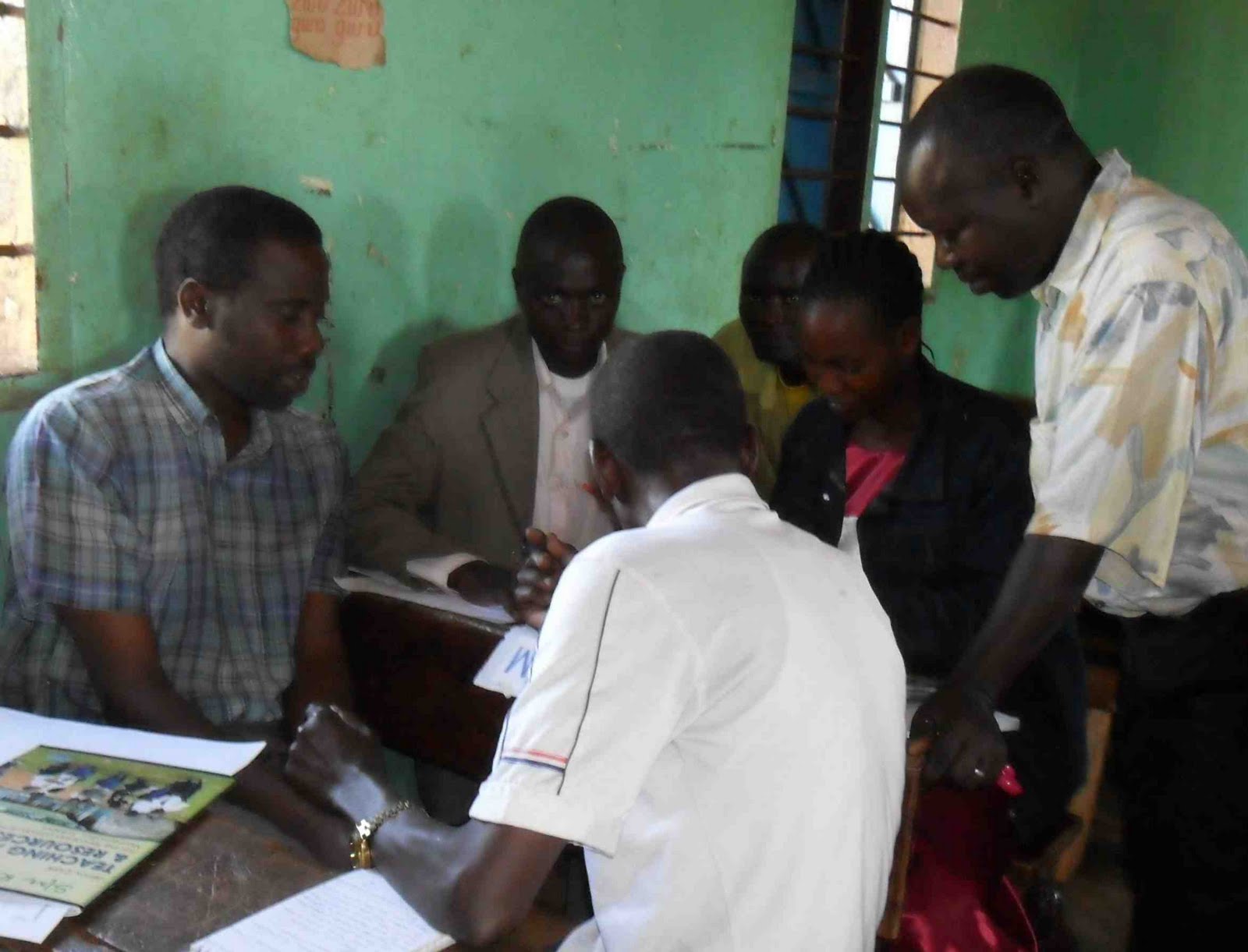
The review visits took the form I was used to. We start with a discussion in the Head Teacher’s office about exam results, attendance and use of participatory method in teaching. We want to know what VSO and the District Office can do to help. Capitation grants to the schools (money paid per pupil) have decreased and Head Teachers are now wondering where the next stick of chalk will come from. The perennial problems of lack of resources and poor parent attitudes to education were aired to explain poor results and attendance. The boys are still preferring working at the brick kilns and fishing to supplement family incomes rather than attending school. Numbers of orphans are displayed in the head teacher’s office – in most schools 20 – 25% of students have just one parent and 5 – 10% have neither.
We observed several lessons. Teachers are trying very hard to improve the quality of their teaching with use of teaching aids. We inspected records of pupil use of the Kagera Reading Program. That also was very encouraging.
Schools are also continuing to work on their grounds and gardens. Katebenga PS continues to be a standout in this field with this integer number line the latest addition to a very stimulating school environment. Their shamba has the dual purpose of teaching children to grow food and raising money from sale of produce. It has expanded and is a focal point of the school community.
Four schools in a morning was a lot to take in but I can feel that VSOs work here is continuing well and I am happy!
Day 10 Wednesday April 11th
Day 2 of school visits and today we saw 3 schools in 3 wards. The first, Kangabusharo PS in Karabagaine ward is one of the most isolated even though as the crow flies it is near to Bukoba. The road to the school is very bad – even the BDCs new 4WD and best driver were wary. The route goes through a prison farm tea plantation as it gets close to the school. The prison is one of the reasons the school has few female teachers and low attendance among the girls. It has a SHARE library, which is an initiative started by a US school girl – unfortunately many of the books are donated from US secondary school libraries and are culturally and academically inappropriate. It was a school where we donated Swahili children’s picture books, which go a long way to encouraging children to read.
Nyarubale PS in Kanyangareko ward was a school I’d never been to before. It was most unusual as the only government primary school I’d seen with glass in the windows. This was just in one building and it was explained that the school had once been an upper primary school. This school had anatomical drawings on the exterior walls of one building – larger than life skeletal system, digestive system, excretory system and reproductive system as well as the structure of the eye and a nerve cell. They were faded – they had been there for many years. And none had ‘bits added’ as they would have had within minutes in an Australian school.
Karamagi PS in Maruku Ward was always one of my favourite schools – it had such a happy, positive feel about it – and visiting it was a joy. This year it has its first Standard VII class and is busy preparing them for the Primary School Leaving (Standard VII) Exams. I wished them all the best with that. The school is not on a ‘road’. It is approached along a single lane walking track between the banana palms. The driver today found a new way to the school, across some paddocks. He must have trusted the 4WD capability of the new ute as it was impossible to see how damp or how rocky it might be under the high grass.
This year is also the year of the Tanzanian census, which happens every 10 years. Teachers are drafted in (and paid a bonus) to help with the census. That means that for 5 weeks, up until just before the PLSE, the schools are virtually closed. In some ways the census is quite Biblical with teachers and boarder students returning to their home village to be counted with their families. Many schools are soliciting donations from parents to use to encourage teachers not involved in the census to come to school and continue working with the Standard VII pupils. It will be very interesting to see results when they are published – five weeks with low level of support just prior to the exam is not a good thing.
This afternoon I had a ‘business meeting with Josiah – he has agreed to be our ‘agent’ in Bukoba so the final piece in our plan to help students and schools is in place!
I also visited the concrete banana palm – it is a piece of public art that was under construction in our time here. It has finally been finished and officially opened. It is another piece of art that I suspect would not remain undamaged in an Australian town.
Day 11 Thursday April 12th
On the list of things you would not expect to when walking through a banana shamba a white rabbit would rate fairly high. This morning I could honestly say a white rabbit made me late. I’d hoped to see the DEO this morning to get some paperwork left over from the end of my placement last July finalised but as often happened when I asked after Mr Fabian I was told “He is not around”. It often happens that the person you want to see “is not around”. It is impossible to know if they haven’t been seen since the beginning of the year or they’ve popped to the duka for 5 minutes. It is not polite to ask as if illness in the family is the reason it may be that they do not want to mention it. With Mr Fabian it is more likely to be a meeting in the main Council building. The paperwork will just have to wait!
We went to Katerero ward this morning in the old 4WD. We saw sleepy teachers and high energy teachers, we saw new classrooms and many that should be demolished before they fall down, we saw porridge being prepared for hungry students.
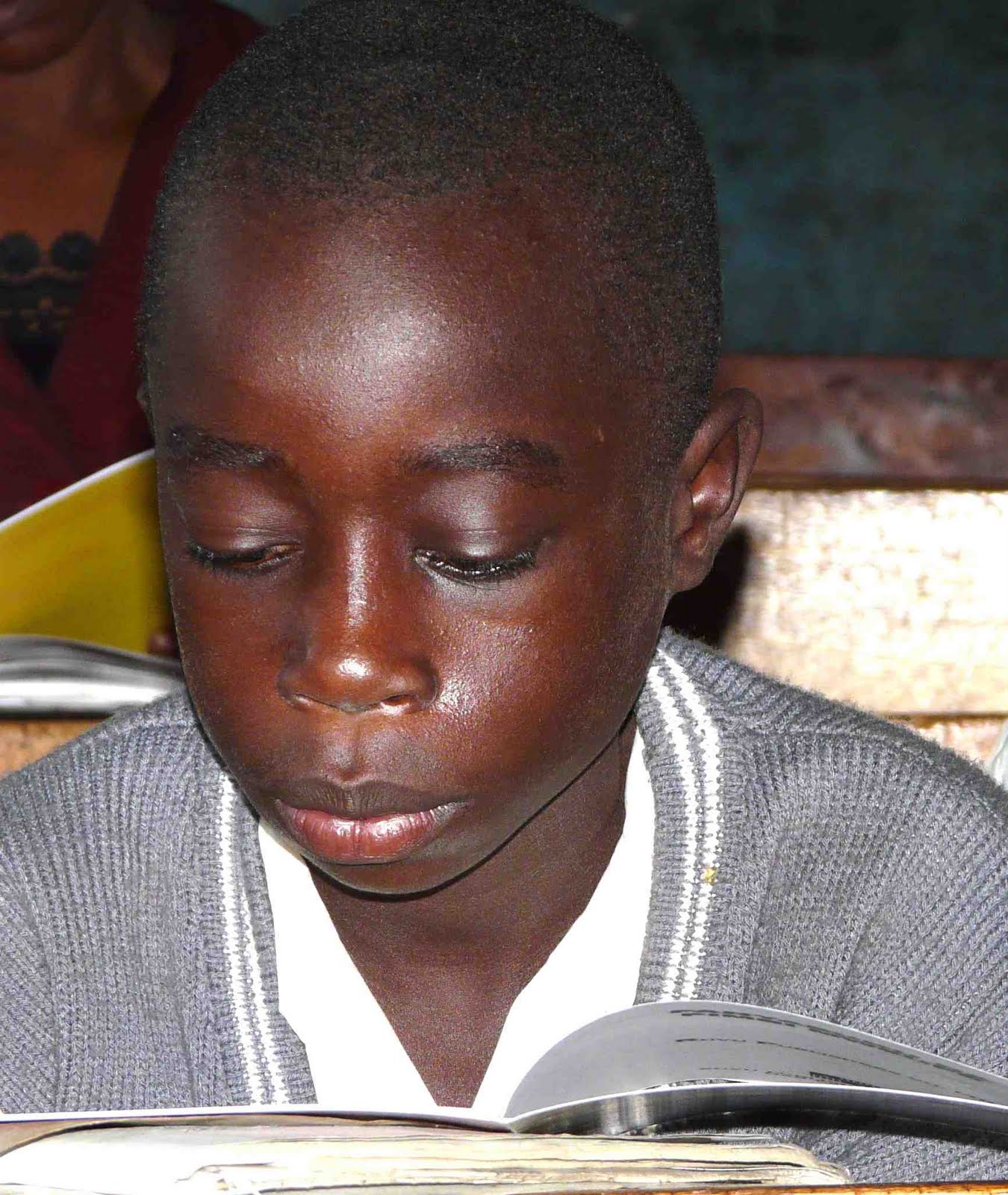
At Mulahya there was a mobile infant welfare clinic in operation. The health worker was weighing babies in a set of scales hanging from a tree and vaccinating them out in the open air. The mothers and children were gathered on and close to the road and our driver had to use his horn to get the car through to the school. This is a new school – it only goes to Std III so far. But is a great school – posters on the wall made for a stimulating environment. It doesn’t have too many resources so we had brought some of the teaching aids made for workshops last year to give to the school. I demonstrated their use while the children sat and read the books that our friends and family had paid for and donated last year. The joy on children’s faces at being allowed read was beautiful to see!
My last school visit was to a school under the Municipal Council of Bukoba – Mafumbo PS. A teacher there had invited me to see the school. He had previously been at a Rural District primary school. Mafumbo is a very big primary school – 1700 pupils and classes of up to 200. I saw a class where Standard V pupils were working sitting on the cement floor as all the desks were full. My friend Cletus’ class had over a 100 pupils and it is the ‘remedial’ Standard IV.
I so admire the teachers who work in these conditions and actually do teach the children. There must be more discipline problems in the town schools as this school had a Maasai guard with a switch to keep the pupils in class.
This afternoon I went swimming at the Walkgard pool with a couple of friends. This is a real luxury! The pool was ‘being fixed’ most of the time we were in Bukoba and was reopened just after we left last year. It is fantastic now – the views are wonderful.
Day 12Friday April 13th
An early start! It has been raining since 1 am when a violent thunderstorm hit. The rain continued and at 6 am it was still pitch black and bucketing down with me standing ankle deep in mud on one side of a locked gate with the driver of the car on the other side honking its horn hoping in vain for the askari to come and unlock it. A phone call from Steph dislodged him from his dry hidey hole and by 6.10 the taxi was loaded with my belongings and those of two other Aussies heading for Kampala. It was rainy and dark all the way to the border at Mutukula where we had a trouble free crossing into Uganda.
The road is being renovated between Masaka and Kampala – parts were very good but their were stretches of narrow bitumen with a drop of up to 15 cm at the edge where the wet season washes the soil away in muddy rivers. There were very many police out and about – this is the main road between Kampala and Rwanda and the Democratic Republic of Congo – but we were only stopped once and not looking threatening we were quickly waved on our way.
The route to Entebbe Airport skirts around and through the suburbs of Kampala. The traffic there was diabolical! It was bumper to bumper (and they are used for ‘bumping’ here!) and drivers trying to get into or across the traffic stream use the method we’d seen in Dar es Salaam of nudging further and further in until no-one can go anywhere. Gridlock would happen if the drivers were not so skilful at fitting a 1.6 m wide car through a 1.5 m space.
The flight from Entebbe to Doha was the first flight that I’d managed to catch that had left on time. The seat next to me was occupied by an East African who I greeted in kiSwahili. He was delighted to hear that I had lived in Bukoba, which was his home town, so we greeted each other in kiHaya as well. When dinner was being offered I discovered that these were his only languages – the steward tried English and French to no avail – so I had the task of translating questions and answers. I also helped to get him on to his connecting flight to Dubai, something he hadn’t realised he needed to do! I hope he has success in his travels and returns safely to Tanzania but he did seem singularly unprepared for the journey!
Day 13 Saturday April 14th
Another flight, another delay. Three out of four of my Qatar Airways flights have been late departing and consequently late arriving. This time it didn’t really matter – except to poor Steve waiting at the airport.
The trip has been a real success. It has been wonderful to see that changes in teaching styles have been maintained and that teachers are learning from each other. It has been wonderful to see changes in classrooms with posters and teaching aids making for a more stimulating environment. And it has been wonderful to see the joy on children’s faces when reading books are handed out that we (and you!) helped to provide.
It was also wonderful to see friends and neighbours in Bukoba; it is a place that has stolen my heart!
Steve and I will continue to support teachers and schools in Bukoba Rural District, any one who would like to join us please contact me and I will let you know about our plans.
Asanteni sana for your support,
Jenny


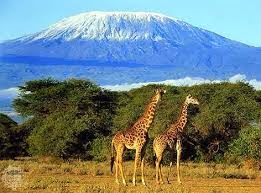




 It is difficult to know where to begin to summarise the last 12 months and after just two weeks back in Australia our time in Tanzania is taking on the qualities of a dream. I have to keep reminding myself of the reality of our little neighbours Baraka and Vivienne, of the beautiful view down to town and the lake from our house and of daily life in what is very much the Third World.